

What is Solar Energy?
Apr 23, 2020
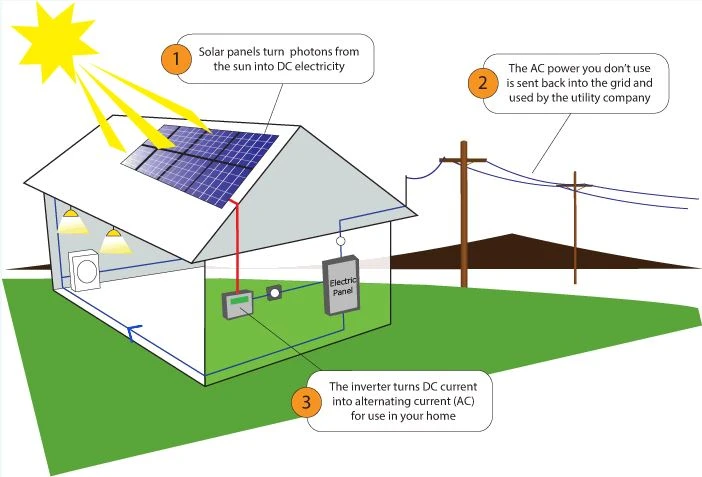
Solar energy is, simply, energy provided by the sun. This energy is in the form of solar radiation, which makes the production of solar electricity possible. Electricity can be produced directly from photovoltaic, PV, cells. (Photovoltaic literally means “light” and “electric.”) These cells are made from materials which exhibit the “photovoltaic effect” i.e. when sunshine hits the PV cell, the photons of light excite the electrons in the cell and cause them to flow, generating electricity. An inverter converts the Direct Current (DC) electricity generated by solar panels into Alternating Current (AC), the form of electricity conventionally used in homes. The system is connected through a meter to the grid.
Solar systems allow you to use your solar power when it is generating electricity during the day and put any excess back into the grid. As soon as you need more electricity than your system can generate, your electricity will automatically be supplied from the grid. At night, your house draws energy from the grid.
Solar energy produces electricity when it is in demand – during the day particularly hot days when air-conditioners drive up electricity demand. In use, solar energy produces no emissions. One megawatt hour of solar electricity offsets about 0.75 to 1 tonne of CO2.
The majority of solar PV installations in Australia are grid-connected systems. Australia is one of the sunniest countries in the world and there is huge potential for solar PV to make a significant contribution to electricity generation.
How it Works?
1. Photovoltaic solar panels: The solar panels convert sunlight into Direct Current (DC) electricity.
2. Inverter: An Inverter then converts the DC electricity into 240volts Alternating Current (AC) electricity suitable to power appliances in your premise.
3. Power for your home: Your home uses electricity firstly from the solar panels. If your electricity use is higher than the supply available from the panels, your system gets the extra power from the electricity grid for your premise.
4. Monitoring usage: A smart meter is used to monitor the electricity used from the electricity grid as well as the electricity your house supplies to the grid.
5. Excess energy: if your solar panel system produces more electricity than you use, the excess electricity is exported to the electricity grid for which your retailer or network pay you agreed Feed-in-Tariff (FiT).


