


How to build offshore PV? Standards are essential
Nov 01, 2022
What standards should be followed for the use of sea areas, development and construction of offshore PV and the corresponding products? With China's Zhejiang, Shandong, Liaoning and other provinces launching incentive measures one after another, offshore PV is gradually moving from a planning vision to a landing attempt.
Recently, the National Energy Administration of China issued an action plan to improve the standardisation and standardisation of energy carbon peaks and carbon neutrality, which clearly proposes to carry out actions to improve the standard system for wind power and photovoltaic. Relying on the construction of offshore photovoltaic projects, the establishment of standardized demonstration projects, give full play to the role of the national new energy evidence experimental platform, and urgently supplement and improve a number of standards, the formation of a perfect wind power photovoltaic technology standards system.
As an emerging form of photovoltaic development, offshore photovoltaic how to establish their own standardization system?
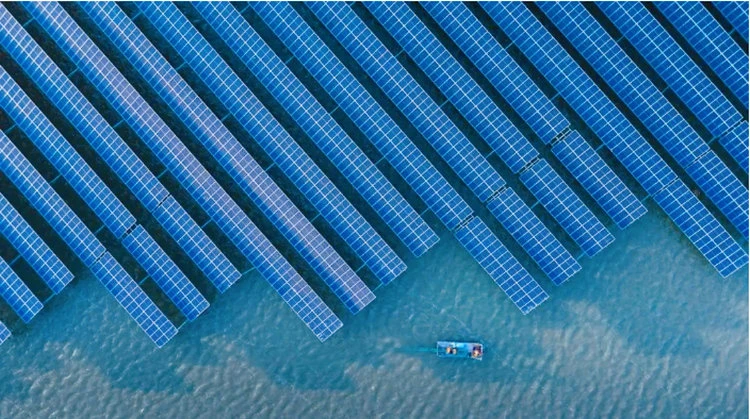
Many places launched sea use related standards
As of the first half of this year, China has confirmed the right to use the sea for nearly 30 offshore photovoltaic projects, involving Jiangsu, Shandong, Zhejiang, Liaoning, Guangdong and other places. In the provinces that encourage the development of offshore photovoltaic, there have been initial attempts at standards for the use of the corresponding sea area.
Not long ago, the Shandong Provincial Bureau of Oceanography issued a notice on promoting the three-dimensional use of sea areas for offshore photovoltaic power generation projects, which makes provisions for the siting of offshore photovoltaic projects, the way and scope of sea use. For example, for piles and photovoltaic arrays in pile-based fixed offshore photovoltaic power generation projects, the Notice points out that the scope of sea use is bounded by the outermost photovoltaic panels of the project with an outward vertical projection of 10 meters; when the outer edge line of the vertical projection of the photovoltaic arrays is less than 10 meters from the nearest dike of the enclosed mariculture and salt fields, the inner slope foot line of the dike is used as the boundary. The scope of submarine cables and sea use in the project is bounded by the outer edge line of the submarine cable extending 10 metres outwards to both sides.
Similarly, the Department of Natural Resources of Zhejiang Province in the "opinions on regulating the management of photovoltaic projects using the sea (draft for comments)" also put forward corresponding requirements for the use of the sea for piled photovoltaic projects in the open sea. For example, for the PV array offshore distance, that is, the nearest distance from the coastline (including the mainland coastline and island coastline) at the edge of the PV array, the control value is not less than 100 meters from the artificial shoreline and not less than 200 meters from the natural shoreline; for the PV array projection area ratio, that is, the total vertical projection area of each PV array accounted for the total area of the project sea, the control value is not more than 65%. Among them, the total sea area of the PV project includes the sea area used by the main project such as PV arrays, inverter boxes, power collection cables, maintenance channels, wave elimination facilities, booster stations and other reserved spaces.
Data accumulation and multi-disciplinary collaboration is the key
The reporter found that in the practice of offshore PV exploration, at present, pile-based PV projects are mostly, floating PV projects are still relatively rare.
"The exploration experience of offshore PV projects within the industry is relatively limited, pile-based projects can refer to the data of some water-based or ground-based PV projects, while floating PV projects cannot directly replicate the scheme design of floating projects in inland waters, which needs to be acquired by enterprises through empirical evidence and demonstration projects, which is also the direction we are working towards." Zhang Xiaoming, executive director and general manager of Zhongneng Zhongcheng New Energy Technology Co Ltd, told reporters that he hoped that through the gradual implementation of the empirical project, relying on more data, the floating project would be promoted from zero to one, and the foundation for future standardisation would be laid."
Uniform standards to avoid waste of resources
In the view of Lin Boqiang, director of the China Energy Policy Institute at Xiamen University, it is important to promote the standardisation of offshore PV products, technology and construction in parallel with the initial rise of offshore PV. "For example, we now use mobile phone charging cables and chargers have been roughly several fixed categories, the function of the products launched by various enterprises may be different, but the size and jack are in line with industry standards. The advantages of unification will not only help to standardise the market, but will also encourage companies to work together to promote the progress and development of the industry as a whole. The significance of the standardization of offshore PV is here."
"Offshore photovoltaic belongs to the renewable energy field inside the new thing. In the initial stage of development, the national level has proposed 'setting up standardised demonstration projects', which can be said to be thinking ahead and walking ahead. The standardisation and standardisation work will be done well, which will avoid subsequent inefficient operations and waste of resources such as human and material resources." Lin Boqiang also pointed out that using the demonstration project as a platform to study and promote standardisation is conducive to the development of the combination of industry, academia and research, establishing a bridge between theory and engineering practice, and laying a good foundation for the development of the offshore PV industry.


