Unveiling The Secrets! How To Choose Ground Screw Piles? You Must First Master This Technique
Jan 07, 2026
Ground screw piles represent a highly efficient foundation technology consisting of tubular steel pipes with integrated spiral blades. The structure primarily comprises three components: a hot-forged pipe body, precision-welded spiral blades, and connecting flanges. After the welding process, the entire unit undergoes a comprehensive hot-dip galvanization treatment for maximum durability. Using specialized driving equipment, these piles are rotated directly into the earth, replacing traditional concrete foundations and allowing for immediate load connection at the top.
The operating principle of ground screw piles is similar to that of a wood screw. By utilizing mechanical torque, they are screwed into the ground to provide a stable base for a variety of structures. This innovative approach makes building foundations more adaptable and significantly faster to install compared to wet-trade methods.
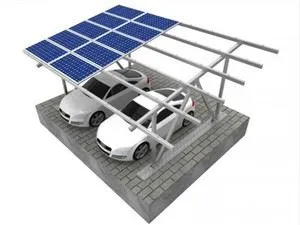
By eliminating the costs associated with ground leveling, soil disposal, and extensive excavation, ground screw piles are widely adopted across numerous industries. They have become the foundation of choice for large-scale solar farms, ground-mounted PV installations, and photovoltaic carports.
Outstanding Advantages of Ground Screw Piles
The steel shaft of a ground screw piles foundation incorporates one or more helical blades. By applying torque to the pile head, the foundation is rotated into the soil, forming a structural anchor capable of bearing both vertical and horizontal loads. As a modern alternative, it replaces traditional reinforced concrete casting, enabling more flexible and rapid construction timelines.
Structural Advantages
Ground screw piles are driven using rotary motion, which minimizes soil disturbance and preserves the natural load-bearing integrity of the site. The specific blade design provides exceptional pull-out resistance and a secure grip within the soil strata.

Simple and Efficient
As a streamlined foundation technique, ground screw piles offer distinct benefits: straightforward installation, short project cycles, and minimal environmental impact. They do not damage the local terrain and are easy to relocate or recycle at the end of a project's lifecycle.
Cost-Effectiveness
Compared to traditional concrete methods-which involve formwork, reinforcement tying, pouring, curing, and backfilling-**ground screw piles** only require positioning and driving. This efficiency can reduce total material and labor costs by up to two-thirds.
All-Weather Construction
Installation is minimally affected by environmental factors. Construction remains feasible under most climatic conditions, including rain, snow, and freezing temperatures, ensuring project schedules stay on track year-round.
Key Considerations for Selecting Ground Screw Piles
Connection Types and Applications
Flange Connection Series: These flanges come in various shapes and specifications to connect with different superstructures. They offer easy disassembly, high connection strength, and convenient adjustment in lateral and vertical planes. They are extensively used for photovoltaic power stations, greenhouses, timber villas, and walkways.

Nut Connection Series: Primarily secured via nut and bolt fastenings, this series features a simple structure and low manufacturing cost. It offers a wide range of vertical adjustment, making it ideal for fencing, signage, and traffic installations.
U-Shaped Plate Series: The distinctive U-shaped design allows for rapid and secure connections for timber columns. Standardized pre-production ensures highly efficient on-site assembly for log cabins, boardwalks, and signage.
Load Parameters and Engineering Data
Screw pile foundations can withstand both vertical and horizontal forces. When estimating the characteristic value of vertical bearing capacity, the pile circumference may be taken as 0, πD (where D is the screw blade diameter), or πd (where d is the pile diameter), depending on the pile's position within the soil. For estimating the characteristic value of horizontal bearing capacity, the diameter is taken as d.
Screw pile foundations are commonly arranged in double-row configurations, primarily subjected to uplift and horizontal loads. Consequently, during design calculations for such foundations, the geometric parameters of the steel pipe piles are typically determined based on the foundation's uplift resistance under wind suction conditions. Subsequently, the foundation's horizontal load-bearing capacity and compressive load-bearing capacity are verified.
| Specifications (mm) | Maximum Load (kN) | ||
| Ground Anchor Length | Blade (Width × Thickness × Length) | Tube (Diameter × Thickness × Length) | |
| 3000 | 100*10*2500 | 89*3.5*500 | >230 |
| 2500 | 100*10*2000 | 89*3.5*500 | 183 |
| 2000 | 100*10*1500 | 89*3.5*500 | 54.4 |
| 1500 | 100*10*1000 | 89*3.5*500 | 36.3 |
| 1000 | 80*8.0*700 | 76*3.0*300 | 14.6 |
| 1500 | 80*8.0*1000 | 76*3.0*500 | 24.6 |
| 2000 | 80*8.0*1500 | 76*3.0*500 | 35.3 |
| 2500 | 80*8.0*2000 | 76*3.0*500 | 60.3 |
| 1000 | 80*8.0*1000 | --------- | 26.3 |
| 1500 | 80*8.0*1500 | --------- | 31.1 |
| 2000 | 80*8.0*2000 | --------- | 46.3 |
| 1000 | 100*10*1000 | --------- | 34.6 |
| 1500 | 100*10*1500 | --------- | 51.5 |
| 2000 | 100*10*2000 | --------- | 62.6 |
| 1000 | 60*6.0*700 | 48*3.0*300 | 12.2 |
| 1200 | 60*6.0*900 | 48*3.0*300 | 17.4 |
| 1200 | 60*6.0*1200 | 48*3.0*300 | 21.2 |
| 800 | 50*5.0*500 | 42*3.0*300 | 7.8 |
| 1000 | 50*5.0*700 | 42*3.0*300 | 11.8 |
| 1200 | 50*5.0*900 | 42*3.0*300 | 13.8 |
| 300 | 30*4.0*300 | --------- | 3.2 |
Soil Type Requirements for Screw Piles
Screw pile foundations are suitable for the following soil conditions: residual soil, fully weathered rock and soil, gravelly soil, gravelly soil, rounded gravelly soil, angular gravelly soil, sandy soil, silty soil, etc. However, feasibility varies depending on specific soil types. Detailed requirements are as follows:
| Types of rock and soil | Composition | Feasibility of using spiral piles | |
| Artificial filling | Plain fill | Gravel soil, sand, silt, clay, etc. | Feasible |
| Compact fill | Compacted or tamped natural fill | ||
| Miscellaneous fill | Fill containing construction waste, industrial waste, domestic waste | ||
| Backfill |
Fill material formed by hydraulic flushing and deposition of silt and sand |
||
| Silty clay | Clay | Plasticity index > 17 | |
| Silty clay | 10 < plasticity index > 17 | ||
| Silt | Soil with a plasticity index less than 10 and a particle size greater than 0.075 mm and less than 50% of the total weight | ||
| Sand | Gravelly sand | Particles larger than 2 mm account for 20-50% of the total weight | |
| Grit | Particles larger than 0.5 mm account for 50% of the total weight | ||
| Medium sand | The content of particles larger than 0.25 mm accounted for 50% of the total weight | ||
| Fine sand | Particles larger than 0.075 mm account for 80% of the total weight | ||
| Silt | Particles larger than 0.075 mm account for 50% of the total weight | ||
| Crushed stone soil | Boulders, stones | The content of particles larger than 200 mm accounts for 50% of the total weight | Inappropriate |
| Pebbles, gravel | Particles larger than 20 mm account for 50% of the total weight | Feasible | |
| Round gravel, breccia | The fraction of particles larger than 2 mm accounted for 50% of the total weight | ||
| Rocks | Hard Rock | Has very high mechanical strength and water resistance | Inappropriate |
| Soft Rock | Mudstone, shale, siltstone and argillaceous open rock | Pre-drilled holes are required | |
To prevent the selection of unsuitable screw piles for construction projects, in addition to the aforementioned three points, the consistency of screw pile quality must also be assessed. Any screw piles with unclear markings or suspected quality issues require follow-up inspection to ensure quality control. Only through rigorous oversight can the quality of screw piles and the overall construction be effectively managed.
The foregoing covers all aspects of selecting screw piles. We hope this proves helpful. What further information might you require? Please feel free to consult us for a bespoke quotation.