Small Footprint And Open Structure! New Floating Photovoltaic System Developed in Norway
Jul 07, 2022
Norwegian scientists have recently tested a new type of floating photovoltaic system in a reservoir in Sri Lanka. The PV system consists of a composite beam that supports the PV modules and a high-density polyethylene tube that provides buoyancy.
Scientists from the Norwegian Institute of Energy Technology recently tested a new floating photovoltaic system designed and developed by Norwegian start-up company Current Solar on a stretch of water in Kilinochchi, Sri Lanka.
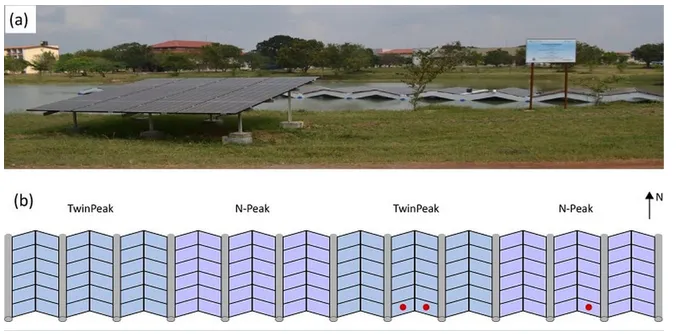
The PV system, which has an installed capacity of 44kW, uses composite beams to support the PV array and high-density polyethylene tubes to provide buoyancy for the PV system.
The researchers said, "The composite beams were aligned in an east to west direction and tilted at 15 degrees, with the PV array mounted in a longitudinal fashion to maximise the use of standard lengths of HDPE tubing."
They used two different types of PV modules supplied by the Norwegian REC Group - REC Solar N-Peak 315 W and REC Solar TwinPeak 295 W.
The floating PV system consists of a total of eight strings," said the researchers. Each string contains 18 modules, with two strings of each module type facing west and two strings facing east. Each pair of strings using the same type of modules with the same orientation is connected in parallel to a separate maximum power point tracker (MPPT) on the same inverter."
The floating PV system uses a 50kW inverter from SMA with a total of six maximum power point trackers (MPPTs). The research team says the floating PV system has a small footprint and a relatively open structure, as the PV modules are close to the water.
The team compared the performance of the floating PV system with a reference 2.5kW PV system installed on the shore for a period of one year. The reference PV system consisted of eight REC Solar N-Peak 315 W PV modules tilted at an 8 degree angle towards the south.
The scientists found that the floating PV system had no performance problems during operation. However, the reservoir where this was installed had been dry for some time.
They said, "The relative difference in power production of the floating PV system during the performance stabilisation period compared to the reference ground-based PV system was 0.6 per cent, which is within the allowable margin of error for the installed capacity and is not considered to be a substantial difference in performance. The findings suggest that the overall performance of the system is the same as other floating PV systems located in similar climatic regions."
The researchers presented their findings in a recent article, "Performance and amphibious operation potential of a new floating PV technology", published in the journal Solar Energy.
They note in the article that "three more years of operational data are needed in order to assess the degradation and reliability of the floating PV system, and we will submit a further report at a later stage of the study."