

ASEAN Renewable Energy Resources
May 07, 2020
Overview of renewable energy resources in ten ASEAN countries
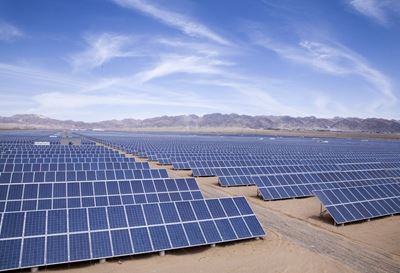
The biomass energy, geothermal energy and water energy resources of ASEAN countries are the most abundant, and wind energy, solar energy and tidal energy have great potential. Indonesia has the most abundant types and resources of renewable energy resources. Myanmar, Vietnam, Malaysia, and Laos are dominated by hydropower resources, the Philippines has more tidal energy resources, Thailand and Cambodia have relatively less renewable energy resources, and Brunei and Singapore have relatively more resources. Scarce.
(1) Hydropower resources
Most of the rivers in the Indochina Peninsula originate in southwestern China. The upper reaches have large drops and turbulent water flow, which is rich in hydraulic resources. The major rivers are the Mekong River, the Irrawaddy River and the Danlun River. In general, Indonesia, Myanmar, Vietnam, Laos, and Malaysia are rich in hydropower resources, and Singapore basically has no hydropower resources.
(2) Wind energy resources
According to the distribution of wind resources provided by Global Wind Atlas, wind resources in Southeast Asia show a trend of high in the north and low in the south, mainly concentrated in Vietnam, Laos, Thailand, northern Philippines and parts of the coastal areas of various countries.
(3) Solar energy resources
The ten ASEAN countries are located on both sides of the equator, with long sunshine time, large radiation intensity, and abundant solar energy resources. From the SolarGIS map, it can be seen that the total annual solar radiation in most ASEAN countries and regions is greater than 1750 kWh / m2. Rich area.
(4) Other renewable energy
Indonesia and the Philippines are rich in geothermal energy resources. Indonesia is the country with the richest geothermal energy reserves in the world, accounting for about 40% of the global geothermal resources. According to data released by the Ministry of Energy and Mineral Resources of Indonesia, Indonesia ’s geothermal power generation potential is about 28.5 GW, of which about 14 GW is in Sumatra, 9 GW is in Java and Bali, and 2 GW is in Sulawesi. At present, 1,808 MW of geothermal power generation has been built. The geothermal resource development potential of the Philippines is 4 GW, and Vietnam and Laos are 340 MW and 50 MW, respectively. There are many islands in the Philippines and Indonesia, with the most abundant tidal energy, with a development potential of about 170 GW and 49 GW respectively; in terms of biomass energy, Indonesia has the most abundant resources with a development potential of 32.6 GW; Thailand, Laos, Malaysia, Vietnam, and the Philippines The development potential is 2.5 GW, 1.2 GW, 0.6 GW, 0.56 GW and 0.24 GW respectively.
Overview of Energy Consumption of Ten ASEAN Countries
At present, the overall energy consumption of ASEAN countries is at a relatively low level in the world, but due to positive factors such as economic development and population growth, energy demand is growing faster. ASEAN countries have relied on fossil energy for a long time, with extensive development methods, low utilization efficiency, and outstanding environmental pollution problems during production and use.
According to IEA statistics, the total primary energy consumption of ASEAN countries in 2016 was 651 Mtoe, an increase of 70% from 383 Mtoe in 2000, and the average annual growth rate was 3.4%. 2000 ~ 2005, 2005 ~ 2010, 2010 ~ The average growth rates in 2016 were 4.0%, 3.3%, and 3.5% respectively, as shown in Figure 1-1. The energy consumption of ASEAN countries has been dominated by fossil energy for a long time, and the consumption of renewable energy accounts for a relatively low proportion. Directly burning biomass energy accounts for a large proportion of primary energy.
Since 2000, coal consumption has grown rapidly, and its proportion in the consumption structure has been increasing. The main reason is that a large amount of coal-fired thermal power has been put into production. The proportion of renewable energy consumption remained basically unchanged, while the proportion of petroleum and biomass consumption decreased.