

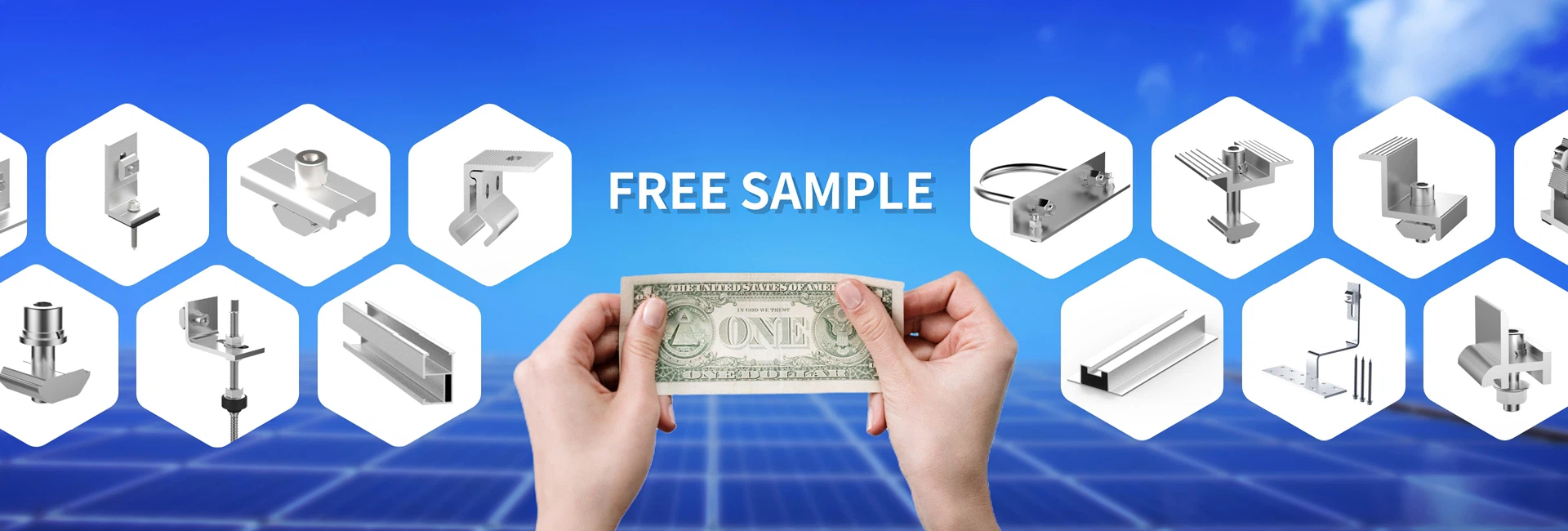
Types of Solar Roof Mounting System
Apr 28, 2020
Different types of roof mounts
Flush mounts are the first type of roof mount that we will cover. They are an inexpensive and a simple option suitable for most roof-mounted solar panel installations. They are generally not adjustable, and as the name suggests, they are designed to lay flush with the roof surface on which they are mounted. The solar panels are generally secured using metal clips that hold the panel in place, leaving about 2-4 inches of space between the roof and bottom of the panel. This allows for plenty of airflow along the underside of the panel, which keeps the panel cool and operating at maximum efficiency. If a panel overheats, its efficiency drops and so does its life.
These mounts are great for homeowners, less so for business owners. Roof mounts in general aim to protect your roof as well as the solar panel itself. The flush mount reduces wind load on the solar panels. Flush mounts are ideal for reducing the dead load on your roof, they work for any type of system, are suitable for high wind areas, there is room for flexibility in the panel slope and orientation and they provide minimal interference with roof drains.
They are not without faults though. Depending on the type of roof you have, installing a flush mount could require a roof penetration (penetrations are not required normally), which will increase the risk of roof leakage.
Ballasted mounts are similar to flush mounts, but use weights to hold the solar panels in place on your roof. This design can save labor time and costs, but presents an additional challenge of getting the weights onto the roof, which can be quite substantial when dealing with larger systems. Ballasted mounts do not require roof penetrations, are faster and cheaper to install and allow for a panel tilt of up to 20 degrees for optimal solar exposure. However, this mount increases the load on your roof, has lower power density, and is less suitable for high-wind areas. They are limited by certain site conditions like roof slope and building height.

There are also hybrid mounts, which you can probably guess are a combination of flush mounts and ballasted mounts. They use some structural elements of both mounts to accommodate some roofs that can't support either. Hybrid mounts require minimal roof penetration, can be fast to install (depending on the model) and allows for custom design optimization based on factors like load bearing and wind. These mounts are typically more expensive and can take up more space on your roof, leaving less room for your system.
Roof-ground mounts are similar in design to normal ground mounts, but are able to "sit" on your roof. Depending on the type of roof you have, this may be better than a flush mount. Roof-ground mounts have the ability to come adjustable or fixed for maximum solar exposure throughout the year.
Roof mounts are optimal when your home or building has sufficient space for all of the solar panels that you require. They also have the option of being fixed or adjustable and can also be installed with a solar tracker. Solar trackers are an automated system that allows your panels to track the sun's path throughout the day for optimal solar exposure and collection. However, while solar trackers do increase efficiency and reduce manual upkeep of your panels, they are not commonly used due to the hefty increase in total cost and the addition of another moving part that potentially break down and cause problems for your array.


